
November 16, 2006
Marked
For those who like pictures with their stories, there's a graphic novel of the gospel of Mark ... Marked. Mark Goodacre had a post about it on his NT Gateway Weblog some time ago :-)


history with an edge/david
Forrest points out that "gospel" was in the ancient world a technical term with a different sense than we use it today:
 "Gospel" then is being used ironically. It is also being used to proclaim a different kind of gospel with a different kind of good news and thus a different kind of world empire. And a part of what we face, if we can see it, is that Mark confronts us with the fact that this game of world empire hasn't changed all that much in 2000 years -- even when played by folks who own the name "Christian" who say their prayers at night, when the wolfsbane blooms and the moon is full and bright.
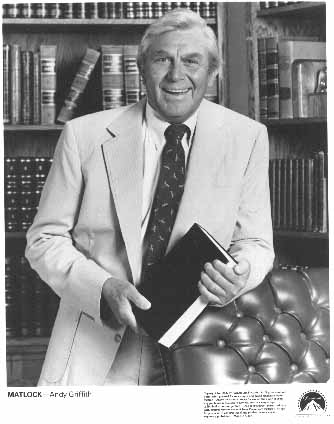
What this points out is that even Mark, the apparently simplest and most straight forward of the gospels is not simply chronology: it is history with an edge. It has an agenda. One of the advantages of reading, say Revelation, is that the agenda is pretty much naked at the party. Mark is more like that country bumpkin lawyer who seems to be stumbling in his homespun ways meanwhile leading the witness and the courtroom into a cul de sac.
One such agenda item seems to be the status of John the Baptist. Mark sets him up as the last of the old style prophets, a fulfillment of HaShem's promise through Isaiah, one who called the Roman subject state of Judea to cleansing and righteousness. Mark then places on John's lips:
It seems likely therefore, that one of the target audiences of this gospel is the followers of John the Baptist who have not yet joined The Cause: who have not yet become disciples of the disciples of Jesus.
As the old maps used to say: here there be dragons
Specifically, a gospel was the announcement that a new Roman Emperor, a new "savior", had agreed to govern the world in exchange for whatever wasn't actually nailed down.
"Gospel" then is being used ironically. It is also being used to proclaim a different kind of gospel with a different kind of good news and thus a different kind of world empire. And a part of what we face, if we can see it, is that Mark confronts us with the fact that this game of world empire hasn't changed all that much in 2000 years -- even when played by folks who own the name "Christian" who say their prayers at night, when the wolfsbane blooms and the moon is full and bright.What this points out is that even Mark, the apparently simplest and most straight forward of the gospels is not simply chronology: it is history with an edge. It has an agenda. One of the advantages of reading, say Revelation, is that the agenda is pretty much naked at the party. Mark is more like that country bumpkin lawyer who seems to be stumbling in his homespun ways meanwhile leading the witness and the courtroom into a cul de sac.
One such agenda item seems to be the status of John the Baptist. Mark sets him up as the last of the old style prophets, a fulfillment of HaShem's promise through Isaiah, one who called the Roman subject state of Judea to cleansing and righteousness. Mark then places on John's lips:
There is someone coming after me who is stronger than I - indeed I am not good enough to kneel down and undo his shoes. I have baptized you with water, but he will baptize you with the Holy Spirit.
It seems likely therefore, that one of the target audiences of this gospel is the followers of John the Baptist who have not yet joined The Cause: who have not yet become disciples of the disciples of Jesus.
As the old maps used to say: here there be dragons
November 14, 2006
gospel according to mark 1:1-8
1:1 - The Gospel of Jesus Christ, the Son of God .....
1:2-3 - ... begins with the fulfilment of this prophecy of Isaiah - 'Behold, I send my messenger before your face, who will prepare your way before you'. 'The voice of one crying in the wilderness: Prepare the way of the Lord, make his paths straight' .
1:4-5 - For John came and began to baptise men in the desert, proclaiming baptism as the mark of a complete change of heart and of the forgiveness of sins. All the people of the Judean countryside and everyone in Jerusalem went out to him in the desert and received his baptism in the river Jordan, publicly confessing their sins.
1:6-8 - John himself was dressed in camel-hair, with a leather belt round his waist, and he lived on locusts and wild honey. The burden of his preaching was, "There is someone coming after me who is stronger than I - indeed I am not good enough to kneel down and undo his shoes. I have baptised you with water, but he will baptise you with the Holy Spirit."
JB Phillips translation
November 13, 2006
Retreating From Revelation
Okay, we're moving on. We weren't quite ripe for Revelation; we leaped ahead to the happy ending before we left, with a lot of questions unsettled. I still hope we come back to this someday.
There's one of those scholarly ‘consensus'-es that Revelation was written as merely a religious pep talk for early Christians facing persecution. There is that element; the threat of persecution was obviously on the author's mind, and a key refrain here is that those who keep the faith get richly rewarded, while bad stuff happens to those who don't. That reading makes the whole book pretty trivial, not much to say about it–and so we've treated it.
The happy ending came along, and that should make everybody there celebrating happy enough, but it isn't at all clear how they arrived and why we haven't yet.
Unsettled questions, probably unraised questions. If we're Christians, and Christianity is based on Judaism, what do we make of the prophets' understanding of history? The Apocalypse is the one book of Christian scripture that applies something remotely like the prophets' tacit view of things. We can treat the book as "inspirational," in which case we find most of it more disturbing than inspiring. We can use it to point fingers, as people have been doing ever since "666" became a numerical word-game. If we imagine "prophecy" means merely "prediction," we can mine it for hints of how God plans to whup us next year.
Or if we're looking for that, we can seek ways to better understand God and our own collective situation. The "meaning of human history," as people generally interpret that scroll with all the seals.
Is "Stuff happens" the governing mechanism of the world? Can we rely on?–or must we settle for?–human progress, techniques of political lobbying or grass-roots organizing, framing of issues, creative nonviolent actions like the ones we did last war, some other notion or gimmick to make the world come out better rather than worse? One strong message of this book–one of the things that makes it so very unpopular–is that we can't do that. Whatever your saving gimmick, it isn't the rock and you can't build there.
People keep trying to build Jerusalem and ending up in Egypt, until God finally pulls the rabbit out of the hat. I still don't understand: Why that rabbit, that hat, that time?–rather than sooner or later?
If the message is to "Just trust God," why is God shown teaching it by wars, plagues, famines and earthquakes? What makes The Beast seem the most interesting character here, the Whore the one seemingly most fun to party with?
If we don't like scarey, violent stories full of bad people and disasters–why do people choose the news and entertainment they generally do watch or read?
We don't like to think of God as responsible for the yucky bits–but monotheism demands that God must be. This, however, is hard to square with our knowledge of God's goodness–which is not a matter of intellectual interest alone, but tied to our whole orientation toward life. Do we get to honestly consider it a good thing?
I understand this aspect of Revelation as stemming from the truth of Buddha's statement--that life (as an ego) is suffering.
Without a felt mystical connection to God, life is inescapably tragic.
But then God–from the very depths of our souls-- rains plagues on us, to bring us out of Egypt, that "narrow place" of slavery we imagine to be our only possible home.
November 11, 2006
2007 Annual Events - Spiritual Directors International

Forgive me for what amounts to shameless self-promotion (but else is a blog for anyway?)
In April of 2007 an international conference will be held in Richmond British Columbia (that's in Canada). The conference is for Spiritual Directors International. I've been a member since 2003 (4?) though I am not a practising Spiritual Director myself. I attended one of their conferences in the past (when it came to Toronto) and while I enjoyed it -- I was also the lone Quaker.
I'm delivering a workshop entitled "Money Work and Identity". It will not be so much on offering spiritual counsel as understanding the dynamics of people in financial crisis and how that may relate to offering them spiritual counsel. I credit this participation in part to a Friend. A number of years ago she recommended my name to Philadelphia Yearly Meeting as someone who might write an article on rendering pastoral care to folks in financial crisis. This workshop will take that article and expand it to include issues of unemployment.
Here is a link to the brochure with the list of workshop offerings: SDI 2007 (pdf file -- Adobe Acrobat Reader required).
I'll be planning and prepping the next few months. Keep me in your prayers.
Subscribe to:
Posts (Atom)